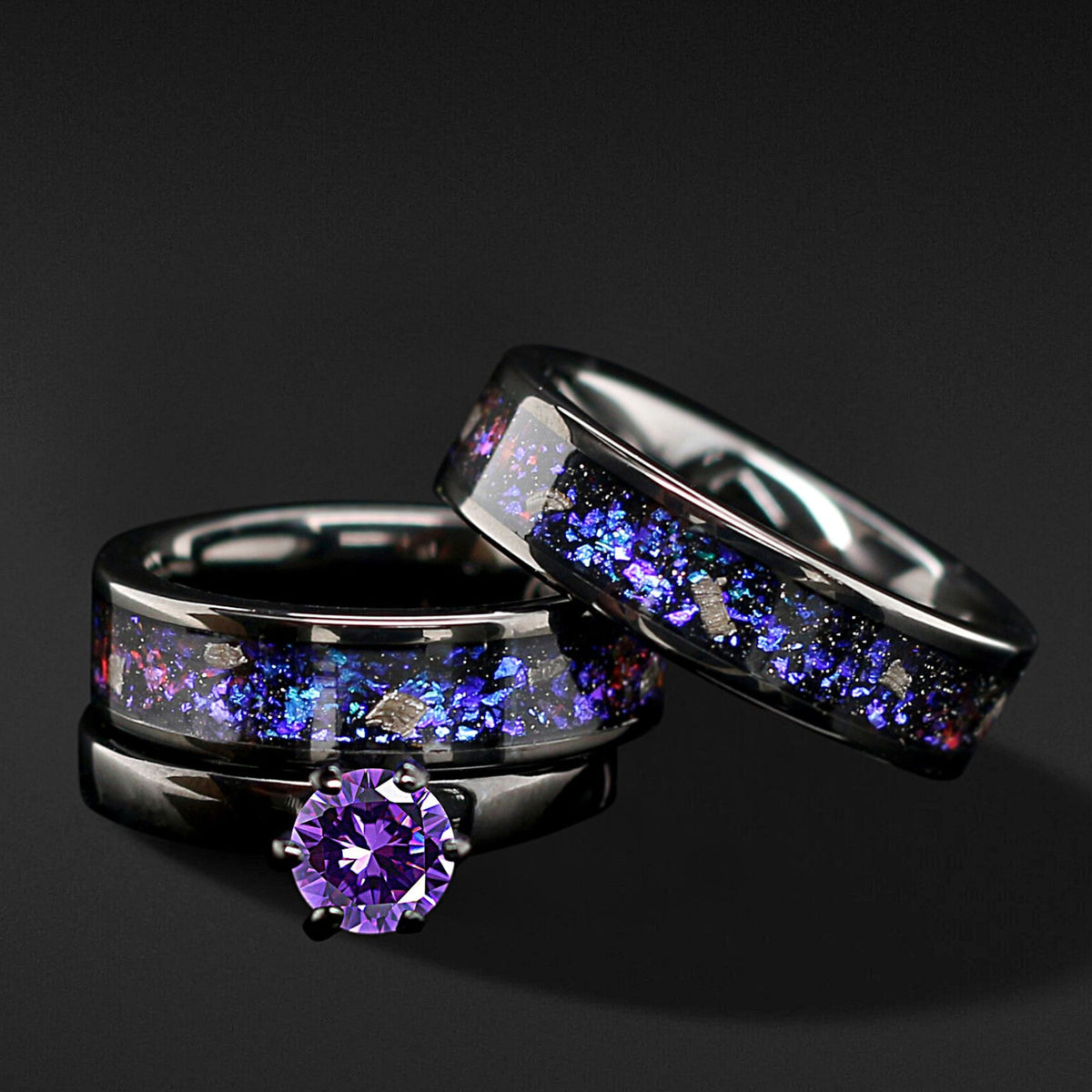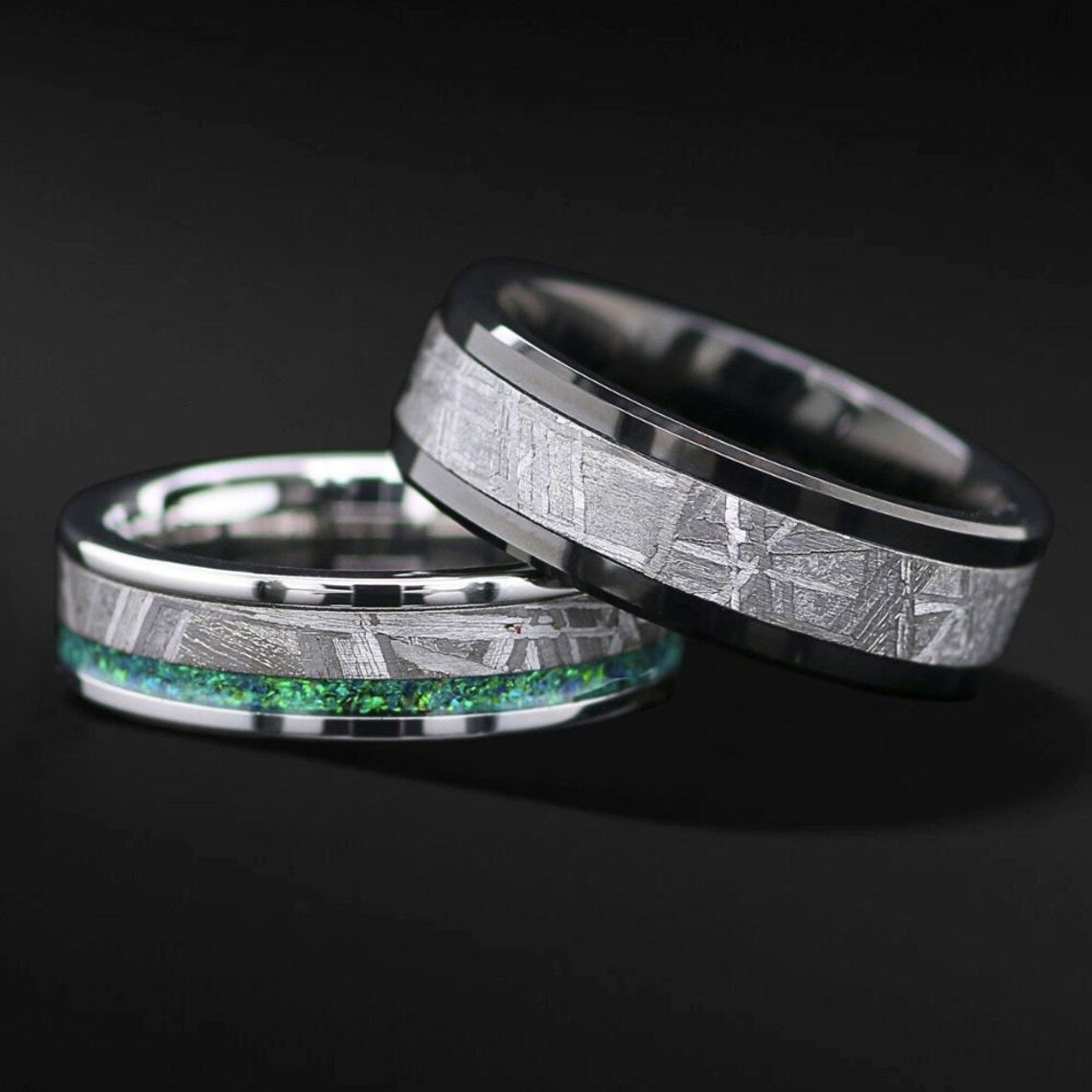
Meteorite Couples Rings: His and Hers, Cut From the Same Piece of Space
Most couples rings pair two bands that happen to match — same metal, same finish, maybe the same stone. A meteorite couples set can do something no other material can: both rings can come from the exact same slice.

Why that matters
Meteorite only forms its pattern once — cut a slice, and the lines inside are fixed for that piece. Cut a wedding set from one slice instead of two separate ones, and his ring and her ring share the same pattern, split from the same fragment. Nobody else is offering that, because it only works if both rings are made together, at the same time, from one piece of material. Order them separately, even from the same seller, and the patterns won't line up the same way.
What people usually pick
His side tends to run wider — 6mm to 8mm is common — set in tungsten or black zirconium for the durability. Hers is usually slimmer, 3mm to 4mm, and more often paired with a stone: opal, moissanite, a small diamond. Some couples go matching metal on both, some contrast on purpose — his in black, hers in gold, tied together by the meteorite running through both.
Iron meteorites like Muonionalusta and Aletai are the usual choice for a set like this, since their pattern reads clearly at any width. Pallasite (we work with Sericho) is rarer to see in a wedding set, mostly because it's a softer material and gets used more in pendants — but it's not off the table if that's the look you want.
What to check before ordering a set
Ask whether the two rings are actually cut from one piece, or just two separate rings made from the same general type of meteorite. Both are real; only one of them gives you a matching pattern. If a seller can't tell you which slice each ring came from, they probably made them separately.
Ask about sizing changes, too — meteorite inlays make a ring harder to resize later than a plain metal band, so it's worth getting sizing right before the ring is made rather than after.
What we build
When we make a couples set, both rings come from one slice, cut and set together. We size each ring individually first, then match the pattern across both — his and hers, split from one fragment instead of two.